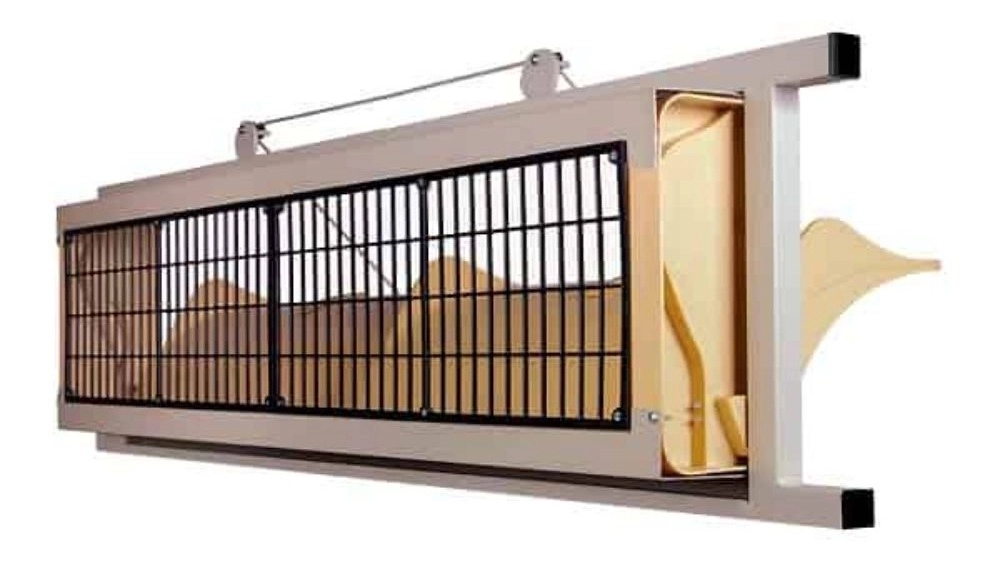
In the poultry industry, one of the most critical success factors and ensuring the health of the flock is creating ideal environmental conditions in the breeding halls. Considering the special climate and temperature changes of the region, the use of suitable equipment and especially the standard poultry inlet valve in Tabriz is doubly important. Correct management of air, humidity and temperature is only possible by using modern and standard ventilation systems. In this article, we will fully review the importance of these valves, installation standards and their key role in improving the performance of poultry farms.
The importance of air conditioning in poultry farms in Tabriz region
Tabriz and East Azarbaijan province experience special weather conditions due to being located in a cold and mountainous region. In the cold seasons of the year, the temperature difference inside and outside the poultry house is very large, and this issue creates great challenges for breeders. In such a situation, the heating systems are highly active, but without an effective ventilation system, hot, humid and polluted air is trapped in the hall.
The cold and heavy air outside tends to penetrate inside through any opening, but if the air entry is not controlled through the standard poultry inlet valve, it will cause frostbite to the birds and cause temperature stress. Proper ventilation in Tabriz is not only necessary to provide the oxygen necessary for the breathing of the chickens, but also to control the humidity caused by the breathing of the birds and their feces. Accumulation of moisture and ammonia in the hall can lead to severe respiratory diseases and decrease the feed conversion factor.
Therefore, choosing equipment that can precisely manage the speed, direction and temperature of incoming air is not a choice, but an unavoidable necessity for poultry farms in this area. The use of modern technologies in the field of ventilation guarantees the health of the herd and the profitability of the breeding unit.
Anatomy and function of standard poultry inlet valve
Inlet valves are actually the points of entry of fresh air into the hall, which play the role of respiratory arteries. A standard poultry inlet valve is not just a simple opening in the wall, but an engineered piece that must be designed and installed with great care. The correct operation of these valves works based on the principle of "vacuum" or negative pressure.
When the exhaust fans at the end of the hall are turned on, the dirty air is removed and the pressure inside the hall decreases compared to the outside. This negative pressure causes the outside air to be drawn in at high speed through the inlet valves. A standard valve should be able to adjust the opening angle of its blades in order to keep the speed of the incoming air in the desired range (usually between 10 and 15 meters per second).
This high speed causes the cold air outside to immediately mix with the warm air and the roof of the hall and gently fall on the birds (the phenomenon of air throwing). If the valve is non-standard or its settings are not correct, the cold air will fall directly on the chickens, which will lead to stress and disease. Also, these valves should have proper thermal insulation to prevent the formation of dew and freezing on their edges, which is very important in the cold climate of Tabriz.
The key role of the inlet valve in temperature and humidity control
As mentioned, temperature and humidity management are two main pillars in poultry farming. The standard poultry inlet valve in Tabriz acts as the main controller of these two parameters. In winter seasons, the main challenge is to maintain the body temperature of the chickens while fresh air enters the house. If the cold air enters without control, the birds will waste a lot of energy to keep their bodies warm, and this will reduce growth and increase feed consumption.
Inlet vents allow warm air from the top of the hall (usually produced by heaters and raised due to lightness) to mix with fresh incoming air by projecting air toward the ceiling. This action makes the temperature of the air that reaches the surface of the birds not have a temperature shock and is within a comfortable range.
In the field of humidity control, these valves prevent the increase of relative humidity by replacing the humid air inside the hall with the drier air outside. High humidity wets the poultry litter, which prepares the litter for the growth of bacteria and ammonia. By correctly adjusting the number of open valves and their opening angle, the humidity level can be kept within the standard range. To see examples of this high-quality equipment, you can visit the Manaj Sanat site.
Inlet valve installation standards in poultry breeding halls
The correct installation of standard poultry inlet valve is as important as the quality of the valve itself. Even the best brands of inlet valves will not perform optimally if they are not installed according to engineering principles. One of the most important principles of installation is the positioning of the valves on the side walls of the hall. The vents should be installed at a suitable height from the floor of the hall (usually a little higher than the height of the birds' heads during growth) so that the incoming air can have a sufficient path to mix with the warm air of the roof.
The distance between the valves is also very important. If the vents are too far apart, dead spots are created in the hall where air does not flow and moisture and toxic gases accumulate. The usual standard for the distance of the vents varies depending on their type and the width of the hall, but it is usually recommended that the center-to-center distance of the vents does not exceed 2 to 3 meters.
Furthermore, valves must be installed in such a way that they are completely watertight and airtight. The presence of air leakage around the valve frame causes negative pressure control to be disrupted and cold air enters the hall uncontrollably through the seams. The use of quality rubber gaskets and proper insulation at the installation site is one of the standard requirements. Also, the opening and closing mechanism of the valves (either manual or automatic) should work smoothly and not get stuck due to moisture and dust.
The difference between the ventilation system and the inlet valve in cold and hot climates
Although the general principles of ventilation are the same everywhere, the application of standard poultry inlet valve in Tabriz (cold climate) has significant differences with hot and humid climates. In a hot climate, the main goal is to reduce the temperature and create wind on the bird's body, but in the cold climate of Tabriz, the main goal is to maintain the temperature and prevent cold air from entering without mixing.
In Tabriz, in cold seasons, we need a smaller volume of air per minute to maintain the temperature, but the speed of the incoming air through the inlet valve must be high so that it can be thrown and mixed with warm air. This is a paradox that can only be solved by fine-tuning the inlet valves. If the valves are opened too much, the air speed will decrease and the cold air will fall (Cold air drop). If they are opened less than the limit, the volume of incoming air is not enough for breathing, and the negative pressure of the hall increases too much, which causes high fuel consumption and turns off the burners of the heaters.
In the summers of Tabriz, although the weather is hot, the nights may be cool. Therefore, the ventilation system must be flexible so that it can be adjusted in different conditions. It is highly recommended for this area to use inlet valves with 4-piece blades or roofs that have the ability to adjust the angle in two directions (up and down).
Inlet valve maintenance and repair guide
In order for your standard poultry inlet valve in Tabriz to always work at high efficiency, a regular maintenance and repair program is necessary. Dust and lint in the air can deposit in the hinges and moving rails of the blades over time and prevent them from opening and closing smoothly and completely. This issue makes it impossible to accurately adjust the intake air.
You should inspect all vents periodically (eg once a month). The blades should move smoothly and all open at the same time at the same angle. If a valve has failed, it should be repaired immediately, as a faulty valve can upset the entire pressure balance of the hall. Also, checking valve insulations and making sure they are healthy is very important to prevent energy loss.
Cleaning the valves from possible dust and grease also increases their lifespan. If automatic control systems are used, the calibration of sensors and actuators must be done annually to maintain the accuracy of the system in changing weather conditions.
The effect of proper ventilation on the health and growth of birds
Finally, the goal of installing a standard poultry inlet valve in Tabriz is to achieve maximum productivity and flock health. Research has shown that air quality has a direct effect on the immune and respiratory systems of birds. Polluted air with high ammonia irritates the intestinal mucosa and the respiratory system and makes the bird vulnerable to diseases.
When ventilation is done properly, birds grow in a clean environment with enough oxygen and the right temperature. This increases the average daily weight, reduces the feed conversion factor and reduces losses. Also, in laying hens, air quality has a direct effect on egg laying percentage and egg shell quality.
Investing in a standard ventilation system is not an expense, but a return investment that ensures the profitability of the poultry farm. Poultry farmers of Tabriz who are familiar with the importance of this issue, by using high-quality equipment and observing the principles of installation, have been able to have a distinctive performance in the country's poultry industry.
Choosing the right brand and providing quality parts
There are many brands in the poultry equipment market, but not all of them have the necessary quality and standards. Choosing a standard poultry inlet valve requires attention to body material (usually hot-dip galvanized or UV-resistant pressed plastic), insulation quality, and precise opening mechanism. Low-quality parts may wear out quickly against high humidity and temperature changes and disrupt the system's efficiency.
To ensure the purchase of durable and standard equipment, it is recommended to purchase from reputable manufacturers with a stellar track record in the poultry ventilation industry. One of the reliable sources in this field is the Manaj Sanat company, which meets the needs of poultry farmers throughout the country by providing diverse and high-quality products. You can refer to the website Manaj Sanat to see the list of products and expert advice.
In conclusion, we note that success in the poultry industry depends on attention to detail. The inlet valve may seem like a small part in the whole salon system, but its role in creating temperature balance and breathing is irreplaceable. With the right choice and installation principles, you can turn environmental challenges into opportunities for growth and performance improvement.